


Which AWD system fits Bloomington, IL, routes better — 2026 Mitsubishi Outlander S-AWC or 2026 Subaru Forester Symmetrical AWD?
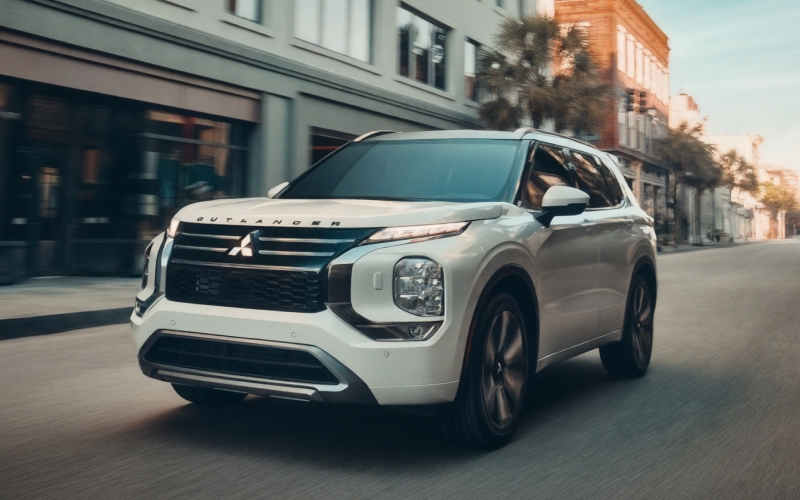
Landmark Mitsubishi – Which AWD system fits Bloomington, IL, routes better — 2026 Mitsubishi Outlander S-AWC or 2026 Subaru Forester Symmetrical AWD?
Drivers comparing Outlander and Forester almost always ask the same thing first: Which AWD system will feel more confident on my everyday routes without feeling heavy-handed or intrusive? It’s a smart question, because the right all-wheel strategy makes errands, commutes, and county-road drives calmer and more predictable—no drama, just grip when you need it.
Subaru’s standard Symmetrical All-Wheel Drive is a proven, full-time system. With a balanced power distribution layout, it constantly monitors traction and vehicle behavior to route power where it’s needed. In the Forester Sport, Limited, and Touring, available dual-function X-MODE® adds Snow/Dirt and Deep Snow/Mud settings that optimize throttle response and traction control to help keep the vehicle moving on low-traction surfaces. On paper and in practice, it’s a setup that delivers consistent, easy-going traction for daily drivers and weekend adventurers alike.
How Outlander’s S-AWC feels different day to day
Mitsubishi’s available Super All-Wheel Control (S-AWC) in the Outlander layers traction management with fine-tuned yaw control to help the vehicle rotate naturally and track precisely through a corner. The system integrates Active Stability Control with selectable modes—Tarmac, Gravel, Snow, Normal, Eco, and, on S-AWC models, Mud—to adapt steering, throttle mapping, and power distribution to the surface. The result is not just improved traction from a stop, but also a sense of precision mid-corner and stability when lanes are slick or patchy. On daily drives with mixed pavement conditions, S-AWC can feel surprisingly transparent—quietly helping you hold a smooth line without nagging corrections.
The Outlander also benefits from a 48V-BSG mild-hybrid system paired to its turbocharged 1.5L MIVEC engine. That electrified assist smooths low-speed response and helps the vehicle settle more quickly after throttle changes, which can make S-AWC’s interventions even more subtle. If your day includes stop-and-go main streets, school pick-ups, and freeway merges, the Outlander’s composed power delivery complements the traction logic in a way that feels reassuring rather than busy.
Visibility, cameras, and confidence cues
Both SUVs bolster grip with helpful visibility tech. Outlander offers a 360-degree Multi-View Camera System beyond the basics, along with available Head-Up Display that keeps key info in your line of sight. Forester counters with an available 360-Degree Surround View Monitor on Touring and wide, upright glass that delivers a clear view of corners and curbs. No matter which you choose, these visibility aids reduce the guesswork in tight lots, angled alleys, and crowded ramps.
Which AWD is better for real-world errands?
It comes down to what you value. If you want always-on traction with selectable surface modes and an emphasis on mid-corner control, Outlander’s S-AWC stands out. If you prefer a full-time, set-and-forget AWD with available X-MODE® settings, Forester’s system will suit you well. For many families, the ability to tailor Outlander’s response—along with its standard three-row flexibility—tilts the decision toward Mitsubishi, especially when school, sports, and shopping all land on the same afternoon.
Key takeaways to guide your test drive
- On-pavement poise: S-AWC’s yaw control can help the Outlander feel steadier mid-corner and in lane changes without calling attention to itself.
- Surface-specific tuning: Outlander’s Tarmac/Gravel/Snow/Mud modes and Forester’s available dual-function X-MODE® both adapt to conditions—test them on your common routes.
- Daily drivability: Outlander’s 48-volt mild-hybrid assist smooths tip-in and recovery, which pairs nicely with S-AWC’s traction logic for quieter, calmer commuting.
Frequently Asked Questions:
Does Outlander’s S-AWC run all the time?
S-AWC engages as needed and adapts based on the drive mode you select. It’s designed to be seamless, helping you accelerate, corner, and brake with stability while preserving a natural steering feel.
How does Forester’s X-MODE® compare?
X-MODE® modifies throttle response, shift strategy, and traction control to enhance grip on slippery surfaces. Dual-function X-MODE® adds separate Snow/Dirt and Deep Snow/Mud settings for tougher conditions.
Which feels more confident on wet city streets?
Both do very well. Many drivers notice that Outlander’s S-AWC provides an extra sense of mid-corner composure, while Forester’s Symmetrical AWD delivers stable, predictable traction at turn-in and exit.
What else should I evaluate on a test drive?
Try tight neighborhood turns, a freeway merge, a quick lane change, and a stop on a sloped side street. Gauge steering calmness and whether the AWD feels smooth or intrusive. Also, test visibility and camera systems when parking.
For shoppers comparing daily drivability across Central Illinois—serving Jacksonville, Decatur, and Bloomington—we suggest scheduling back-to-back drives on your usual roads. Landmark Mitsubishi can set up a route that mirrors your errands so you feel the differences where they matter most. Whichever way you lean, you’ll gain year-round assurance; the question is which type of traction management best fits your routine.
0 comment(s) so far on Which AWD system fits Bloomington, IL, routes better — 2026 Mitsubishi Outlander S-AWC or 2026 Subaru Forester Symmetrical AWD?