


Is AWD standard on the 2026 Mitsubishi Eclipse Cross compared with the 2026 Hyundai KONA around Champaign, IL?
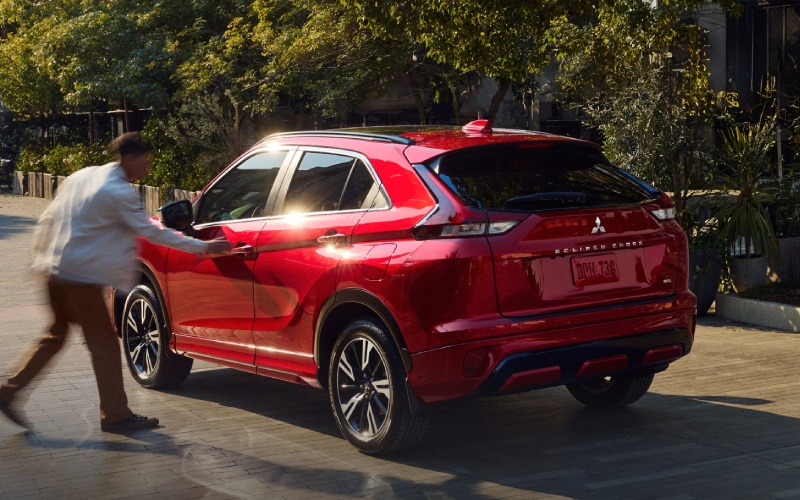
Landmark Mitsubishi – Is AWD standard on the 2026 Mitsubishi Eclipse Cross compared with the 2026 Hyundai KONA around Champaign, IL?
Shoppers comparing small SUVs often start with a simple, practical question: Is all-wheel drive standard? If your daily driving includes rain, slush, gravel shoulders, or the occasional unplowed lane, that’s the right place to begin—especially around Champaign, IL, where weather can turn quickly, and rural connectors add loose surfaces into the mix. In the current crop of compact crossovers, two popular choices sit at the top of many lists: Mitsubishi’s Eclipse Cross and Hyundai’s KONA. The key difference is foundational. Every 2026 Eclipse Cross includes Super-All Wheel Control (S-AWC), while the 2026 Hyundai KONA offers HTRAC All Wheel Drive as an available system. That means Mitsubishi builds traction management into the DNA of every trim level, whereas the Hyundai requires you to select the right configuration to get similar peace of mind.
What S-AWC means in everyday driving
S-AWC is more than an on-demand AWD badge. It integrates front-to-rear torque distribution with brake-based torque vectoring through Active Yaw Control. The idea is to keep the vehicle settled and on your intended path even when surfaces shift: a dusting of snow at an odd angle across Prospect Avenue, a shiny patch of rain-polished tar on Mattis, or gravel pulled onto the asphalt near rural intersections. Drive modes—Normal, Snow, and Gravel—adjust how the system responds, so you can set-and-forget for a whole season or tailor things when the surface demands it. The result is less steering correction, less wheelspin, and a more relaxed feel in the driver’s seat.
HTRAC All Wheel Drive on the Hyundai KONA adds welcome traction when equipped, and it, too, provides selectable modes. If you choose an HTRAC-equipped KONA, you’ll find it helps on loose surfaces and light snow. The difference is how seamlessly—and how often—you benefit from the technology: S-AWC is there for every Eclipse Cross driver, while KONA shoppers must opt in via the correct trim and drivetrain selection.
Feature fit: traction, visibility, and control
When you’re comparing AWD systems, also look at the support features that enhance confidence. Mitsubishi pairs S-AWC with active safety and visibility tools that reinforce control: Forward Collision Mitigation with Pedestrian Detection, Lane Departure Warning, Blind Spot Warning with Rear Cross Traffic Alert, and, on upper trims, a Multi-View Camera System that gives you a surround perspective in tight parking. A Handsfree Power Tailgate is available, so loading cargo when the pavement is wet is one less thing to wrestle with. The Eclipse Cross also brings a factory towing rating up to 1,500 pounds, making it easier to pull a lightweight trailer or weekend gear without guesswork.
The KONA’s Hyundai SmartSense suite is equally notable, with Smart Cruise Control with Stop & Go, Forward Collision-Avoidance Assist, and a Surround View Monitor on Limited that make everyday tasks easier. Bluelink+ connected services add remote lock/unlock and other conveniences. From a tech standpoint, both vehicles hit the essentials. The Eclipse Cross subtly tilts that balance by baking in core capability—S-AWC—across the board.
How to test-drive AWD the right way
A meaningful AWD comparison happens beyond the straight, dry boulevard. Consider a short test loop with three parts:
- Take off from a stop on a surface that’s imperfect—light gravel, wet leaves, or a damp painted crosswalk line—to feel how cleanly the systems put down power.
- Drive a few long, slightly curved on-ramps and exits to sense steering corrections and mid-corner composure.
- Park in a tight lot and back out between cars to evaluate low-speed control and camera coverage.
As you do, pay attention to your hands and shoulders—how often are you making small corrections? Do you feel wheelspin or a tug as the system reacts, or does the vehicle simply track where you intend? In our experience, the Eclipse Cross’s S-AWC delivers the kind of calm, predictable behavior that reduces fatigue over a full day of errands and commuting.
Ownership confidence beyond traction
There’s also value in how each brand supports the ownership experience. Mitsubishi backs Eclipse Cross with an industry-leading 10-year/100,000-mile Powertrain Limited Warranty, 5-Year/60,000-Mile New Vehicle Limited Warranty, 5 years of 24-Hour Roadside Assistance, and 2-Year/30,000-Mile Limited Maintenance. Hyundai KONA counters with its own 10-year/100,000-mile Powertrain Limited Warranty and a robust safety technology lineup. Both approaches demonstrate strong commitments; Mitsubishi’s included maintenance adds another layer of predictability that many buyers appreciate.
Common follow-up questions
As shoppers dig deeper, we hear variations on the same themes. Here are concise answers you can use as a checklist.
- Is AWD standard on Eclipse Cross: Yes. S-AWC is included on every 2026 Eclipse Cross trim.
- Is AWD standard on KONA: No. HTRAC All Wheel Drive is available based on trim and configuration.
- Are snow and gravel modes included: Eclipse Cross offers Snow and Gravel modes with S-AWC; KONA offers drive modes with HTRAC when equipped.
- Do both offer surround-view cameras: Yes. Eclipse Cross offers a Multi-View Camera System on upper trims; KONA Limited features a Surround View Monitor.
- Can either tow from the factory: Eclipse Cross is rated to tow up to 1,500 pounds; KONA gas models in the U.S. are typically not factory-rated for towing.
If you’re deciding between these two capable small SUVs and AWD is central to your choice, the straightforward answer is this: Eclipse Cross makes advanced traction the default, not the exception. That simplifies the buying decision and pays off every time the weather or surface changes.
When you are ready to see how S-AWC feels on your familiar roads, schedule a test loop that includes your daily routes and a couple of imperfect surfaces. One drive can reveal how a standard, integrated system reduces small corrections, tire screeching, and second-guessing. Landmark Mitsubishi is serving Lincoln, Taylorville, and Champaign with knowledgeable product specialists who can walk you through the technology step-by-step, then hand you the keys so you can feel the difference where it counts—behind the wheel.
Bring your questions, plan a route, and make the comparison on your terms. AWD is not a spec to check—it’s a daily companion. Choose the one that’s ready for you every time you start the engine.
0 comment(s) so far on Is AWD standard on the 2026 Mitsubishi Eclipse Cross compared with the 2026 Hyundai KONA around Champaign, IL?